This hospital grant was awarded from the Japanese Government in late 1997 for infrastructure development and purchase of materials but did not have financial support for administrative costs. Still we are operating our activities for over 26 years and using all medical accessories properly.
In 1996 in order to reduce the gaps between health services and the community, and to raise awareness amongst the poor of available health program the Maria Mother & Child Health Care Clinic was established and later it became a general hospital with strong referral system in the community of remote village under Barisal district in Bangladesh.
The program staff of this general hospital has been able to identify and treat the aliments in surrounding communities. It also met with the Upazila health and family planning offices to identify the best approaches to meet the needs of vulnerable populations.
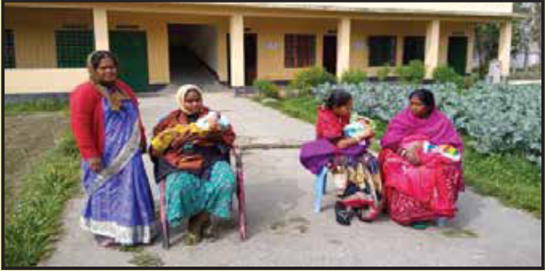
Under this project at least 08 female Health Motivators are working in the field levels and they are always active to identify primary health problems and record them in referral slips. Patients then take these slips to nearby Maria general hospital and are given preferential treatment. For health practitioners, the use of the slips means doctors can quickly identify the issues of concern and more importantly see cases in need of treatment. However the main focus of the program is to provide low cost medical service delivery amongst poor section of people, especially who are not able to access health services due to their acute poverty and adverse surroundings in the intervention areas. In that case the health motivators take the responsibility to identify gaps between the clients and provide them counseling about Ailments that are what they should do during pregnancy if any complications arise. They also advise how they access postnatal and antenatal care and all sorts of primary health care services amongst poor community.
The above circumstances were the main reasons for Aloshikha to start a small hospital with medical equipments and especial attention is given to the health condition of women and children. Finally the hospital is registered with the Ministry of Health Bangladesh Government and recognized as 10 beds general hospital. This hospital started its services in January 1997 but is still in the process of becoming financially self-sustaining. Aloshikha hopes to reach self-sustainability in the shortest time possible.
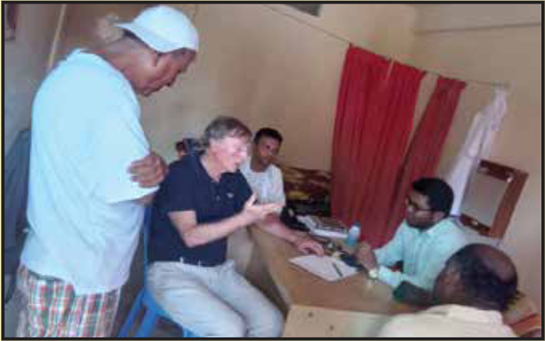
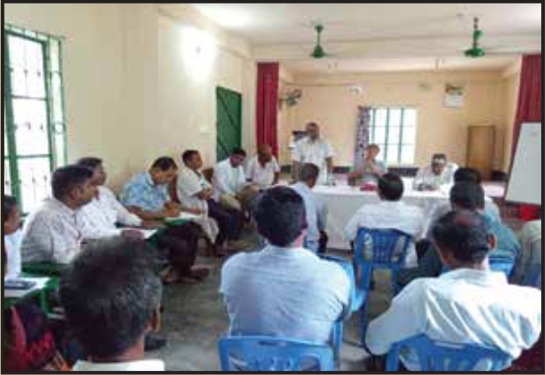
However, Tom Geer, came to Rajhihar in 2024 and stayed for 2 weeks at stretch and oriented the doctors, nurses how to improve the services of the hospital. Founding out some problems of the hospital he, devised a 10 year action plan for upgrading the infrastructure and services of the hospital. He also sat with management of the hospital.
and made them know about the problem of the hospital and his plan to upgrade the services of the hospital. However, modernization of the hospital will help better services; at the same time turn out of the patients will also be increased.
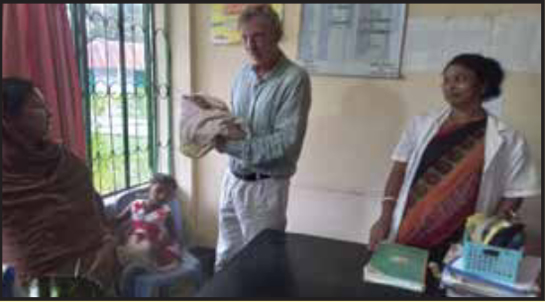
During his visit he also rendered treatment services to the local people and guided the doctors and nurses of the hospital how to handle the patients effectively and improve the services.
Maria Mother & Child Health Care Clinic services through the trained health providers are as follows:
a. Indoor/Outdoor 24 hours medical emergency service
b. Major/minor operation facilities
c. Ante-natal, neo-natal and post-natal along incubation facilities
d. Diagnostics facilities such as Ultrasound, Diathermia, incubator, ECG, Digital X-ray, Blood, urine, stool, sputum etc.
e. Resistance fund facility for the poor
f. Patients referral (Ambulance) and out call facilities
g. Family planning, safe motherhood, breastfeeding, HIV and hygiene counseling
h. Audio/Video health conciseness program for out/indoor patients
i. Collaboration with the Bangladesh government such as EPT, NID, sterilization etc.